

If you are thinking about buying a property in Spain, you will probably hear the words “Nota Simple” quite early in the process. At Malaga advocaten, we have been helping international clients with property transactions on the Costa del Sol since 1998, so we know that Spanish legal terminology can sometimes make a straightforward purchase feel more complicated than it needs to be.
Fortunately, the basic idea behind a Nota Simple is easy to understand. It is one of the documents used to check the registered legal situation of a property before you buy it. In this guide, we explain what a Nota Simple is, what information it contains and what you should look for as a buyer.
What is a Nota Simple in Spain?
A Nota Simple, or Nota Simple Informativa, is an informative document issued by the Spanish Land Registry (Registro de la Propiedad).
It provides a summary of the information currently registered against a particular property, including its identification, registered ownership and rights or charges affecting it.
Put simply, it helps answer some very important questions before you buy:
Who is the registered owner? What exactly is registered? And are there any mortgages, restrictions or other registered charges affecting the property?
The Nota Simple reflects the information held by the Land Registry at the time it is issued. This is important because the registered situation of a property can change.
Is a Nota Simple the same as the title deeds?
Nee.
De title deed, usually referred to as the escritura, is the notarial document relating to the transaction or ownership.
The Nota Simple is an informative extract from the Land Registry.
It is also different from a certificación registral. The Spanish Registrars explain that a Nota Simple has an informative purpose, while a registry certificate is the document that formally proves the contents of the Registry against third parties.
For most property buyers, however, the Nota Simple is a very useful starting point for legal checks.
What information does a Nota Simple contain?
Although the exact content will depend on the property, a Nota Simple normally contains information such as:
- Identification and description of the property
- The registered owner or owners
- The rights registered over the property
- Mortgages
- Usufructs
- Restrictions or limitations affecting registered rights
- Other registered charges or encumbrances
The Spanish Land Registry describes the Nota Simple as containing the property’s identification, the holders of registered rights and the nature, extent and limitations of those rights.
For a buyer, this means the document can reveal information that deserves attention before proceeding with the purchase.
One important point: a Nota Simple should not be treated as a complete list of every possible debt or issue connected with a property.
It shows information recorded at the Land Registry. Other checks may still be necessary during the legal due diligence process, for example in relation to local taxes, community matters, planning or the physical description of the property.
Why is a Nota Simple important when buying a property in Spain?
Buying a property is a major financial commitment, particularly when you are doing it in another country.
A Nota Simple gives your solicitor an important first picture of the property’s registered legal position.
It helps confirm who owns the property
One of the first things to check is that the person selling the property is actually shown as the registered owner.
This might sound obvious, but ownership can sometimes be more complicated than expected. There may be several owners, different ownership percentages or rights affecting the property.
You need to understand who legally holds the registered rights before moving forward.
It can reveal mortgages and other registered charges
The Nota Simple can also show mortgages, embargoes and other rights or charges registered against the property.
Finding a mortgage on a Nota Simple does not automatically mean that you should not buy the property.
Mortgages are common.
The important question is what the charge means and, where necessary, how it will be cancelled or dealt with as part of the sale.
This is where simply obtaining the document is not enough. It also needs to be interpreted in the context of your particular purchase.
It helps check that you are buying what you think you are buying
The document also contains a registered description of the property.
Your solicitor can compare the Land Registry information with the documentation relating to the property and investigate any discrepancies that require further attention.
For example, Malaga Solicitors regularly advises buyers to check both Land Registry and Cadastre information where there are differences between the physical property and its documented description.
What should you check in a Nota Simple before buying?
When reviewing a Nota Simple, some of the most important points are relatively simple.
Before buying, you should establish:
- Who owns the property? Does the registered owner correspond with the seller?
- Is the property correctly identified? Does the registered information correspond with the property you intend to buy?
- Are there mortgages or other charges? If so, what are they and how will they be dealt with?
- Are there restrictions or registered rights affecting the property?
- Is the information recent? A Nota Simple only reflects the registered situation at the time it was issued.
This last point is easy to overlook.
A Nota Simple someone obtained several months ago may be useful for background information, but when you are progressing with a purchase you normally want to work with up-to-date Registry information.
After more than 25 years assisting foreign clients with property transactions on the Costa del Sol, our experience is that the key is not simply having a Nota Simple. It is understanding what the information means for the particular property you want to buy.
[Insert here a client review or testimonial relating to a property purchase in Spain]
How do you get a Nota Simple in Spain?
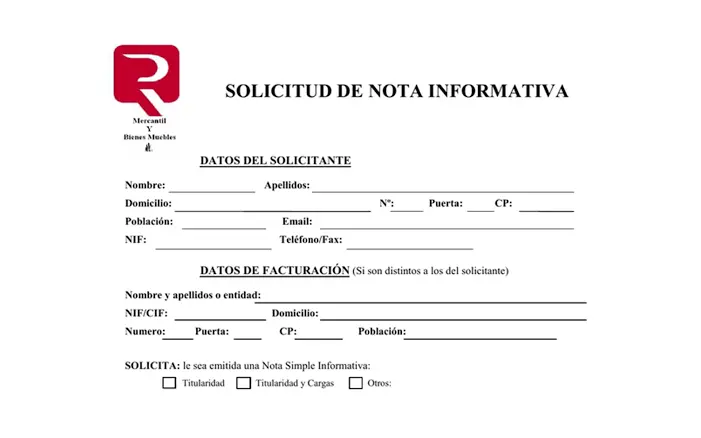
A Nota Simple can be requested from the Spanish Land Registry.
Requests can be made through the relevant Registry or online through the official service provided by the Colegio de Registradores de España. The person making the request must identify the property and explain the legitimate interest behind the request.
There are several ways a property can be identified, depending on the information available, including its Land Registry details or its unique registration code.
The official Registrars’ service can also provide an English translation when requested, which can be helpful for international buyers.
If you have instructed a solicitor to handle your property purchase, they can obtain and review the relevant Land Registry information as part of the legal due diligence.
Do you need a solicitor to check a Nota Simple?
You can obtain a Nota Simple yourself.
The more important question is whether you understand everything it contains — and whether the document raises issues that require further investigation.
Some entries are straightforward. Others are written using Spanish property and Land Registry terminology that may be difficult to interpret, particularly if Spanish is not your first language.
And checking the Nota Simple is only one part of the legal work involved in buying property in Spain.
A property solicitor can review the Registry information alongside the rest of the documentation and explain whether anything could affect your purchase.
For an international buyer, that can make the process considerably clearer.
Frequently asked questions about the Nota Simple in Spain
A Nota Simple is commonly used as part of the checks carried out when buying property in Spain. It allows the buyer and their legal adviser to review important Land Registry information before proceeding.
It is also commonly used by banks when assessing mortgage applications.
A Nota Simple reflects the registered situation of the property when the document is issued. Because that situation can change, it is sensible to work with recent Registry information during a property transaction rather than relying on an old copy.
It can show registered charges, such as mortgages or embargoes, but you should not assume that it shows every possible debt or liability relating to the property.
Other legal and financial checks may therefore be required before completing the purchase.
Yes. Land Registry information can be requested directly, including through the official online service of the Spanish Registrars, provided that the necessary property information and legitimate interest are supplied.
Your solicitor can also obtain it as part of the conveyancing process.
The Spanish Registrars offer an English translation service for Nota Simple documents. The Spanish version issued by the Registry remains the underlying registry information.
No single document should be used to make that decision.
The Nota Simple provides important Land Registry information, but a proper property purchase involves other legal checks as well. What needs to be reviewed will depend on the property and the circumstances of the transaction.
Buying a property in Spain? Make sure you know what you are buying
A Nota Simple is one of the most useful documents to review before buying property in Spain.
It can help confirm ownership, identify registered mortgages or other charges and highlight information that may need further investigation.
But obtaining the document is only the first step. The important part is understanding what it means for your purchase.
If you are considering buying a property in Málaga or elsewhere on the Costa del Sol, Malaga Solicitors can review the legal status of the property and guide you through the purchase from the initial checks to completion. Contact our team to discuss your property purchase.






 Dutch
Dutch  English