
Do you know the Axarquia Villages? The Axarquía, a picturesque region nestled on the Costa del Sol, is a corner of Spain that has been keeping its secrets for a long time. With undeniable charm and exceptional quality of life, this paradise in southern Andalusia has become a dream destination for those seeking a lifestyle change or a savvy real estate investment.
In this article, we will explore the hidden treasures of the Axarquía, highlighting its promising quality of life and the unique opportunities it offers to those who wish to immerse themselves in an environment where tradition blends with modernity, and where comfort intertwines with natural beauty. Discover why investing in the Axarquía could be the wisest decision of your life.
Frigiliana
Frigiliana is probably the most visited and well-known Axarquia village, excluding the coastal areas. It was awarded the first prize for beautification in 1982 and has been designated as a historic ensemble since 2014.
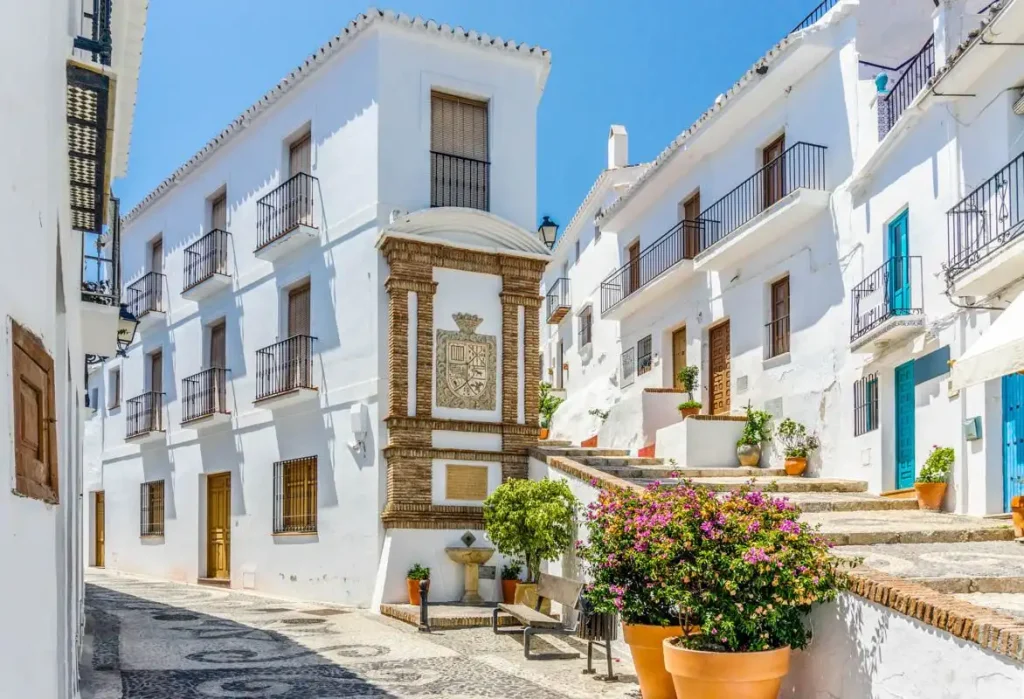
Of Arabic origin, but with a history dating back to Roman times, Frigiliana stands out for having the best-preserved Arabic old town in all of Spain. The preservation of its artisan traditions, including esparto, water gourds, wax, glass, clay, wood, wool, and more, turns the local shops into works of art.
What should you visit when in Frigiliana?
- The Tejeda, Almijara, and Alhama Mountains.
- Frigiliana Archaeological Museum.
- The Palace of the Counts of Frigiliana, known as “El Ingenio,” a Renaissance mansion from the 16th century. It currently houses a molasses factory, the only traditional factory of this product in Europe.
- The Lizar Castle, a relic from the village’s Arab past.
Periana
Another Axarquia Village, Periana, known as the best natural amphitheater in Europe located 550 meters above sea level and bordering Granada, offers magnificent views towards the Viñuela Reservoir and the Tejeda Mountains.
It is of utmost importance that you try their native peaches and their extraordinarily high-quality olive oil, a unique hallmark of Periana, renowned throughout Málaga for it.
In the village, you can find the ancient sulfur water baths, known as the “Baños de Vilo,” which during the 18th and 19th centuries were one of the most famous spas in Andalusia.
In Mondrón, a hamlet of Periana, you’ll find the San José Artesano cooperative, which produces one of the most exquisite olive oils in the province of Málaga.
Comares
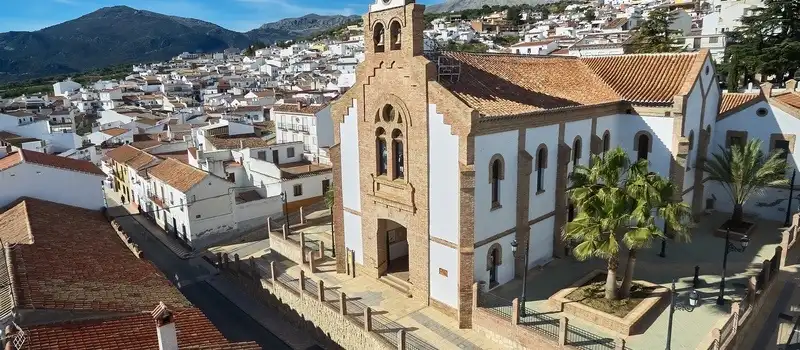
Comares is an Axarquia village of Arab origin, located at over 700 meters above sea level, nestled between the Axarquia and the Montes de Malaga. It’s also known as the ‘Balcony of the Axarquía‘ due to its breathtaking views of the mountains and even the coast.
For nature and sports enthusiasts, Comares offers a spectacular zip line, a via ferrata, and several trails near the village where you can explore some of its springs.
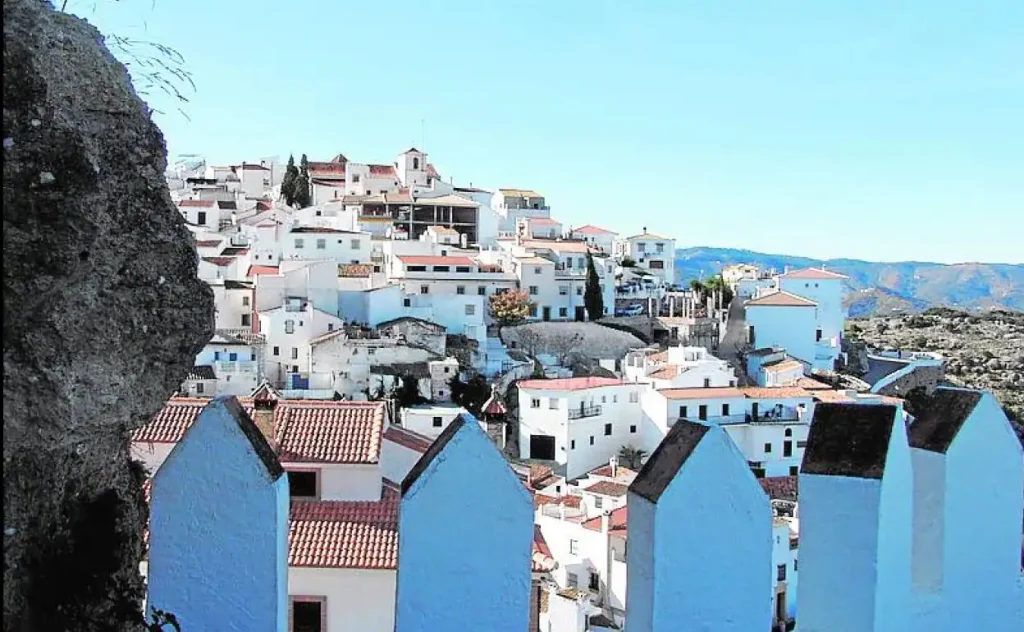
Comares’ primary riches lie in the production of olive oil and wines, as well as almond harvesting, making it a must-visit stop on the olive oil, wine, and raisin route.
This village is also the birthplace of a style of folk singing known as ‘verdiales,’ which bears its name.
What should you visit in Comares?
- The Church of the Incarnation, built in Mudéjar style on the site of the former mosque, and it’s the best-preserved of its kind in the entire province of Malaga.
- The Castle of Comares and the Aljibe de Mazmullar, both part of the Arab heritage left in this village. The Aljibe has been declared a Historical-Artistic Monument.
Competa
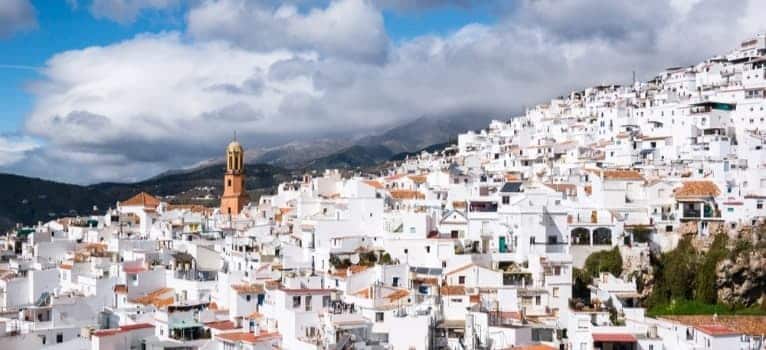
Cómpeta, renowned for its wine and culinary culture, is located at 630 meters above sea level. This village is a natural balcony with stunning views over the entire Axarquia region. It is often referred to as the “Cornice of the Costa del Sol” due to its privileged location.
If you want to sample their spectacular wine, you can visit the Almijara Wineries. Don’t miss the Wine Festival on August 15th, during which the locals stomp grapes to make wine that is then offered to visitors along with a portion of migas (a traditional Spanish dish).
What should you visit in Cómpeta?
The Church of Our Lady of the Assumption, known as the “Cathedral of Axarquia,” is built in Neo-Mudéjar style and features a large fresco in the main altar representing the Assumption of the Virgin Mary.
Other attractions you shouldn’t miss include the Hermitage of San Sebastian, the Hermitage of San Anton Abad Extramuros, the Museum of Arts and Popular Customs, and the Hadriano Mill Museum.
Almachar
Located in the heart of the Malaga Axarquia, Almáchar is another village of Arab origin that preserves its urban structure with steep, narrow streets and white houses. It also boasts breathtaking views that will leave you breathless.
The town is well-known for its delicious raisins and Moscatel grapes, which are carefully hand-selected. It is home to the Raisin Museum, where you can learn all about this local specialty.
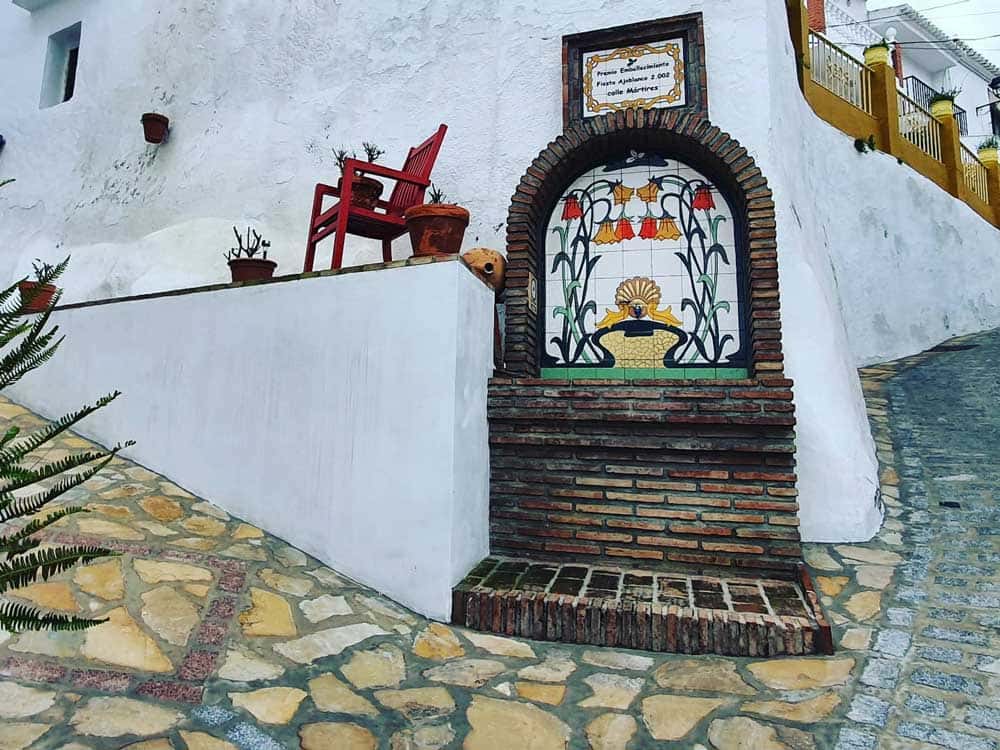
The standout monument of this locality is the Parish Church of San Mateo, situated in the town center. Built in the 16th century, it follows the architectural canons of late Gothic, blending with Renaissance elements. The exterior of the temple is dominated by a square Mudéjar-style tower.
Almáchar also produces wine that you can taste and purchase at various establishments, along with excellent Moscatel raisins.
Another culinary delight awaits during the first weekend of September on Ajoblanco Day, featuring a cold soup made with garlic and almonds, which visitors can savor.
Salares
Discover this small village of Arab origin nestled among the Natural Park of the Sierras de Tejeda, Almijara, and Alhama, at an elevation of 560 meters above sea level. It’s a very charming, tiny white village with whitewashed houses, surrounded by almond trees, orange groves, and olive trees.
Salares is part of the Mudéjar route due to its ancient Arab layout. Its most prominent celebration takes place in September when the Andalusian Arab festival is held, commemorating the town’s Muslim past.
What to see in Salares?
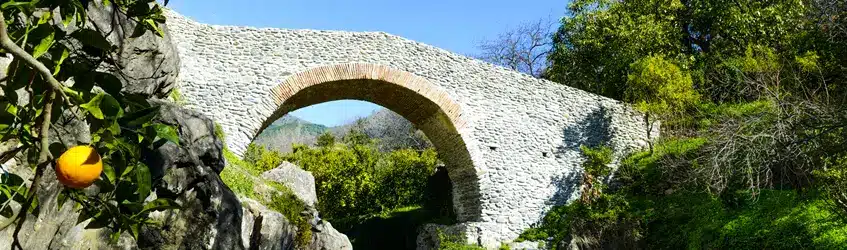
The Parish Church of Santa Ana, dating back to the 16th century, is of Mudéjar style. It stands as one of the finest examples of Almohad art in Spain and is declared a National Historical-Artistic Monument.
Sayalonga
A village located in the Axarquia region with an Arabic layout, it’s where many of our clients have chosen to live for its tranquility, culture, and landscapes.
Known as the paradise of the loquat, you can attend the Loquat Day on the first Sunday of May, celebrating one of the town’s most typical products with free tastings.
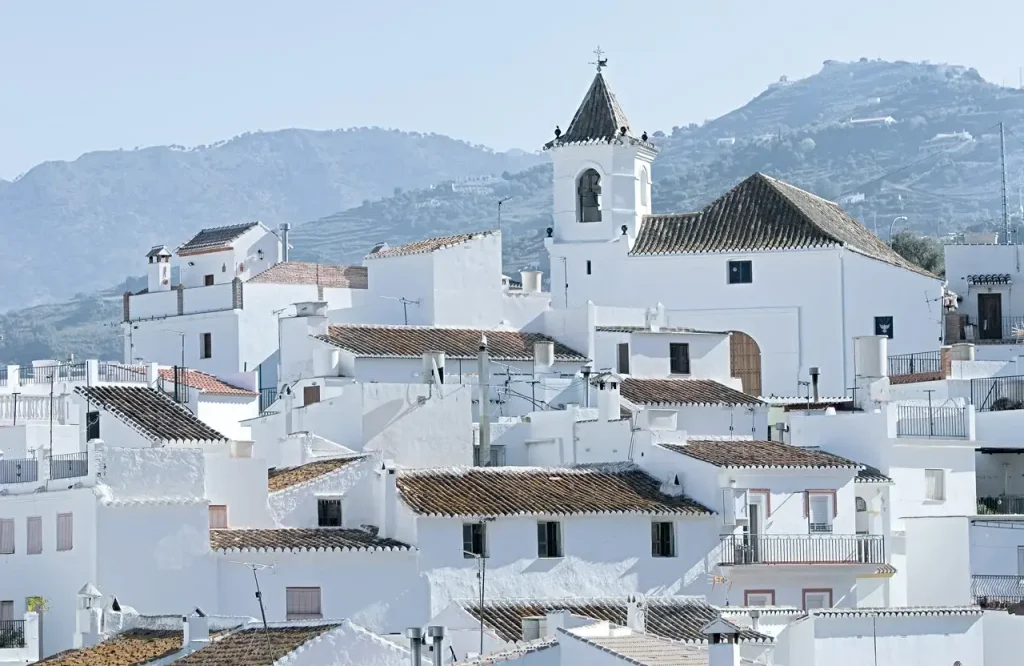
This village is home to one of the most unique cemeteries in Malaga. Its distinctive round cemetery, one of the few in Spain, is a major tourist attraction in the Axarquia, drawing over 3,000 visitors annually. Built in the nineteenth century, it’s an anonymous work that seems to blend with nature, imitating its spontaneity.
Why was the round cemetery of Sayalonga built?
The reason for its circular shape is not entirely clear, and there are several interpretations.
The first explanation is quite simple: the cemetery is round because the available space for its construction was circular. Easy to understand but not a very romantic justification, is it?
The second explanation suggests that the construction of the place tried to mimic the shape of its predecessor cemetery, which was located in the churchyard of Santa Catalina.
The third and most romantic explanation of all argues that the circular shape was intended to ensure that the deceased would not turn their backs on each other.
You should also visit the 16th-century hermitage of San Cayetano, the Mudejar-style church of San Pedro, the Morisco Museum, and the Cid Fountain. Additionally, you can explore the Alcuza Alley (which means ‘funnel’ in Arabic), one of the narrowest in the Axarquia, measuring just 55 cm at its narrowest point.
If you’re into Enotourism in Malaga, don’t miss a visit to Bodega Bentomiz.
Canillas de aceituno
Situated at 650 meters above sea level and nestled at the foot of the beautiful Sierra Tejeda, with its highest peak, La Maroma, reaching over 2000 meters in height, magnificent views are guaranteed.
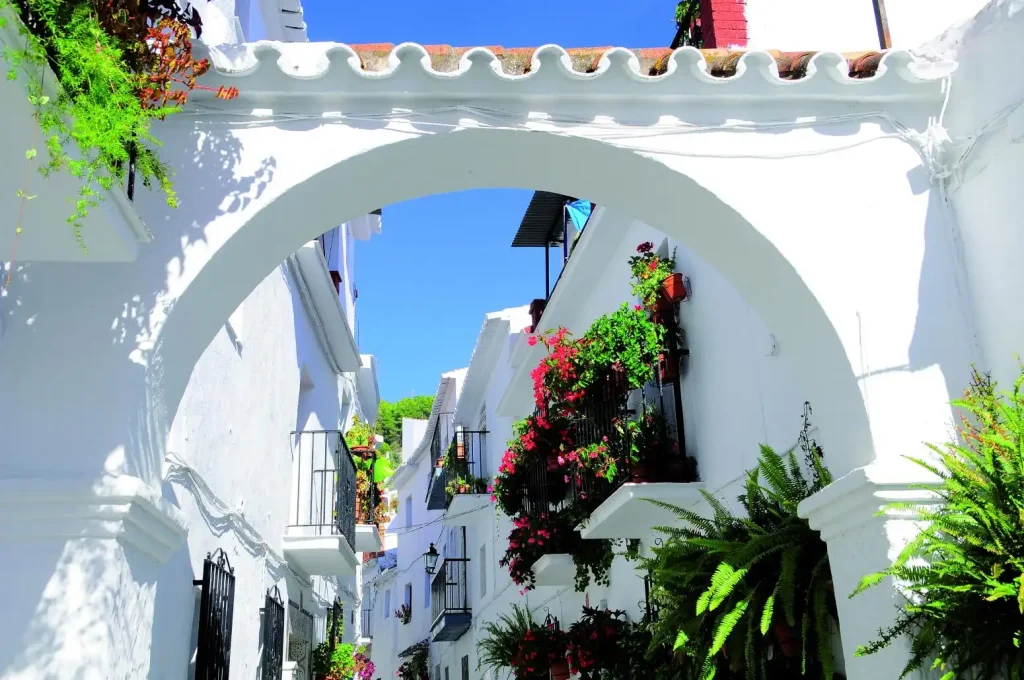
Founded during the Muslim rule, Canillas de Aceituno still preserves its entire history in its streets and buildings. It is also part of the Mudéjar Route, declared of Touristic Interest in Andalusia.
At the highest point of the village, you can start the El Saltillo route, known as “the other Caminito del Rey” of Malaga, featuring a suspension bridge that hangs 70 meters above the Almanchares River, connecting the towns of Canillas de Aceituno and Sedella.
What to see in Canillas de Aceituno?
The Church of Our Lady of the Rosary and Saint Leo the Great, dating back to the 16th century with its Gothic-Mudéjar style. From its terrace, you can oversee the entire village and the landscape, and inside the church, you can admire various works of art.
You should also explore the House of the Tithes or the Queen Mora, the Esgrafiated House, the Arab Cistern, and the Large and Small Fountains.
Sedella
Situated at 650 meters above sea level on the slopes of Mount Maroma, the highest mountain in the province of Malaga, Sedella is part of the Mudejar route of typical Arabic origin villages. This itinerary offers the opportunity to glimpse the era of Muslim domination through the Andalusian legacy that this inland Malaga village preserves.
Its houses and streets are always adorned with flowers and feature charming courtyards that are the clear hallmark of this town.
Sedella is dedicated to vineyard cultivation, making it a recommended visit for wine enthusiasts in Malaga. You can taste their variety in the tasting room at Bodega Sedella.
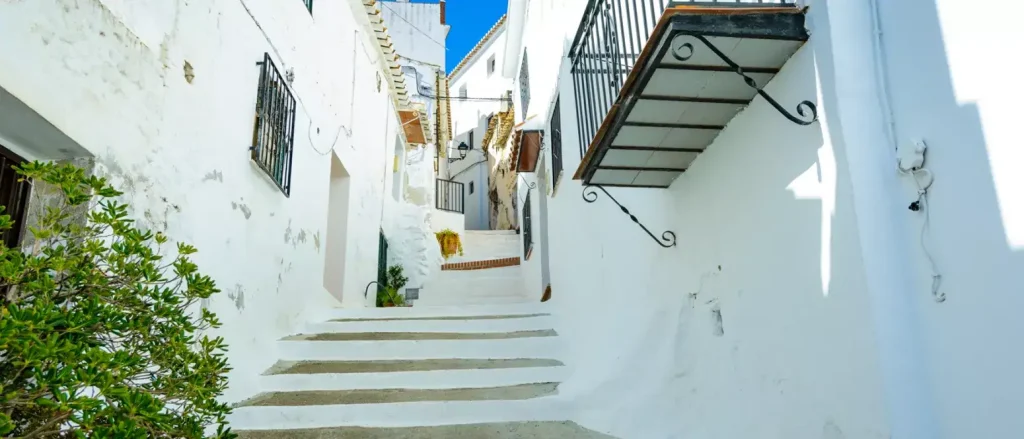
What should you see in Sedella?
- The Church of San Andrés, where you can observe interesting sculptures, a custody, and cult objects from the 17th and 18th centuries.
- The Hermitage of the Virgin of Hope, where you can see the remains of the ancient Arab castle of Sedella integrated into it.
- The public washhouse, where you can see where social life used to take place in the village, allowing you to imagine what it was like in the past.
Alfarnate
This village, located at almost 900 meters above sea level and bordering the neighboring province of Granada, was founded during the era of Muslim rule in Malaga. Alfarnate has become a cherry paradise, to the extent that it has been dubbed the Malaga’s Jerte Valley. This is because among its rocky mountains, cherry trees in its valley stand out, contrasting with the typical Andalusian olive trees.
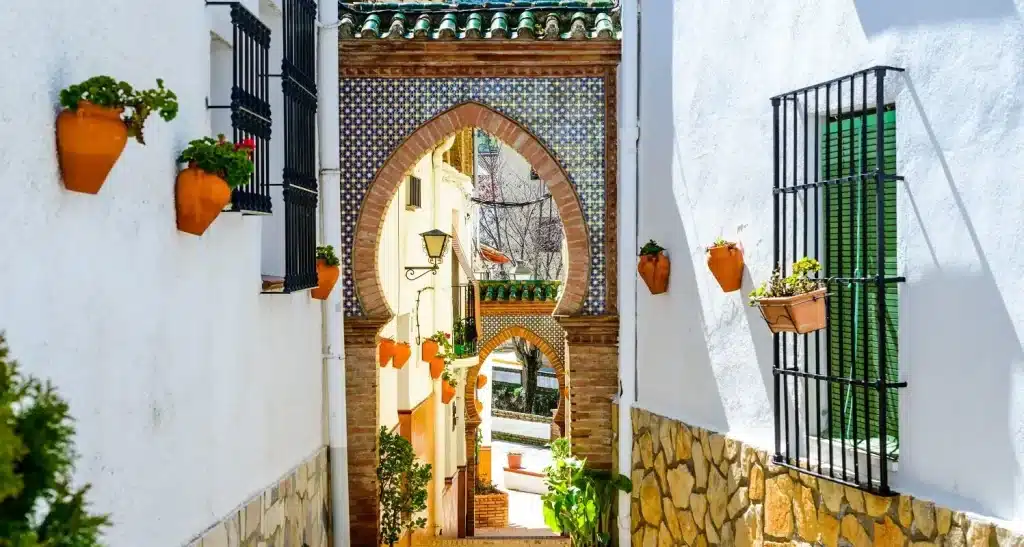
What should you see in Alfarnate?
You should enjoy its Moors and Christians Festival, celebrated every September, commemorating Alfarnate’s past.
The Old Venta de Alfarnate, dating back to the 18th century and currently functioning as a restaurant and museum of Andalusian banditry history. It’s a must-visit for gastronomy enthusiasts.
The Parish Church of Santa Ana, the most beautiful monument in Alfarnate, known for its Mudejar tower built in the 16th century.
Discover the Hermitage of the Virgin of Monsalud, also from the 16th century, featuring its beautiful arcades connected by semicircular arches.
The Alfarnate Museum of Antique Toys, where a multitude of antique pieces and toys dating back to 1880 are gathered. You can witness the passage of time in everyday objects like these.
In summary, the Axarquía is more than just a location on the map; it’s an experience that can change your life. From the stunning mountain views to the crystal-clear beaches, from the local traditions to the well-balanced modernity. This corner of Spain offers an exceptional quality of life that few places can match.
If you’ve felt the call of the Axarquía and want to explore the exciting real estate opportunities this region has to offer, don’t hesitate to get in touch with our team of real estate lawyers. We’re here to guide you every step of the way and ensure that your investment is secure and successful.
Don’t wait any longer to make your dream of living in the Axarquía a reality. Contact us today and let us help you find your perfect home in this paradise on the Costa del Sol!

Marketing Department – Malaga Solicitors Group
Responsible of updating the website, network planning, customer follow-up and data monitoring.
Languages: Spanish and English.


 English
  Dutch
Dutch